 05 July 2022
The Real Problem in Agriculture Isn’t Demand—It’s Distribution
In many villages, a farmer may spend a few minutes in the morning buying soap, sugar, and cooking oil from the local duka, then spend the afternoon travelling to town searching for seed that should already be available in the same community.
The contradiction is striking.
The village duka is already there—at the centre of community life, serving daily household needs every single day. Farmers trust it. Families rely on it. It is where people buy the essentials they need to survive and work.
Yet when it comes to agricultural inputs, many of these same shops remain understocked, inconsistently supplied, or disconnected from reliable agricultural distribution systems.
So, farmers continue travelling to towns, spending time and transport money searching for products that should already be accessible within their own communities. Sometimes the products are out of stock. Sometimes they are counterfeit. Sometimes they simply cannot be found at all.
And so, planting is delayed. Productivity suffers before the season even begins.
This reality is far more common than it should be.
Because the problem is not that agricultural solutions do not exist.
Farmers want genuine agricultural inputs. Suppliers already produce them at scale. Village dukas already exist deep within rural communities.
The challenge is that the systems connecting them remain weak.
The real problem in agriculture is not demand.
It is distribution.
The Missing Layer in Rural Agriculture
Across Uganda and many rural markets, village dukas already serve as the primary retail hubs for local communities. These small shops supply the daily essentials people rely on—maize flour, sugar, cooking oil, soap, toothpaste, dry-cell batteries, beverages, and household goods.
They are deeply embedded within community life because they are accessible, trusted, and convenient.
But despite serving farming communities every day, most village dukas stock only limited agricultural inputs—often just small quantities of maize or bean seed, or a few basic tools like hoes (jembes) or machetes (pangas).
This creates a major contradiction within rural economies.
A farmer can easily access household essentials within walking distance, yet accessing genuine agricultural inputs—the products that directly affect productivity and income—often remains difficult, inconsistent, and unreliable.
That is not because rural demand is weak.
Farmers are already buying agricultural inputs. Suppliers are already producing them. And rural retail infrastructure already exists.
The missing layer is a reliable distribution system that enables village dukas to function as dependable agricultural access points.
Why Distribution Matters More Than We Think
Distribution is often treated as a background activity—as if it is simply about transport or moving inventory from one place to another.
But in rural agriculture, distribution determines whether solutions actually reach the people they are meant to serve.
Missing the right farm input at the right time can completely disrupt a farmer’s season. A farmer who fails to access seed during planting season risks losing an entire harvest cycle. Delays in fertiliser delivery can weaken crop performance, while late application of agrochemicals may lead to serious crop damage. Even postharvest storage products, when accessed too late, can result in unnecessary spoilage and reduced incomes.
For many rural farmers, inconsistent product availability means spending more money and time travelling to distant towns — or worse, settling for unreliable alternatives that compromise productivity and profitability.
Poor distribution creates invisible costs throughout the agricultural system. Farmers lose time, productivity, and income. Dukas lose customers and potential revenue. Suppliers lose market reach and sales consistency. Rural communities remain economically underserved.
When distribution fails, opportunity fails with it.
Reliable distribution is not simply logistics infrastructure.
It is economic infrastructure.
Because even the best agricultural products create no impact if they never reliably reach the farmer.
Unlocking Existing Rural Retail Infrastructure
This is the challenge Farmerstack was built to solve.
Farmerstack operates as a demand-driven last-mile distribution network connecting manufacturers to rural farming communities through trusted village dukas and cooperatives.
The goal is not to build entirely new retail infrastructure from scratch.
The infrastructure already exists.
Village dukas are more than small shops. In many rural communities, they are the closest and most consistent retail infrastructure people already rely on every day. They understand local buying behaviour, community trust, and the realities of rural demand better than almost anyone else.
What has been missing is a system that enables these shops to reliably stock agricultural inputs with the same consistency and convenience as everyday consumer goods.
Farmerstack helps close that gap by coordinating supply, distribution, and local demand.
The system tracks what farmers are buying across locations, crop cycles, and seasons to ensure that the right products are stocked where demand actually exists. Farmerstack works with trusted manufacturers and suppliers to bring genuine agricultural inputs into one coordinated distribution system, helping them reach underserved rural communities more efficiently.
Inputs are then delivered directly into village communities through local dukas and cooperatives, reducing the need for farmers to travel to distant urban centres.
At the centre of the model are the dukas themselves.
Village dukas are already the heartbeat of rural commerce. Farmers buy household essentials from them daily because they are nearby, familiar, and trusted.
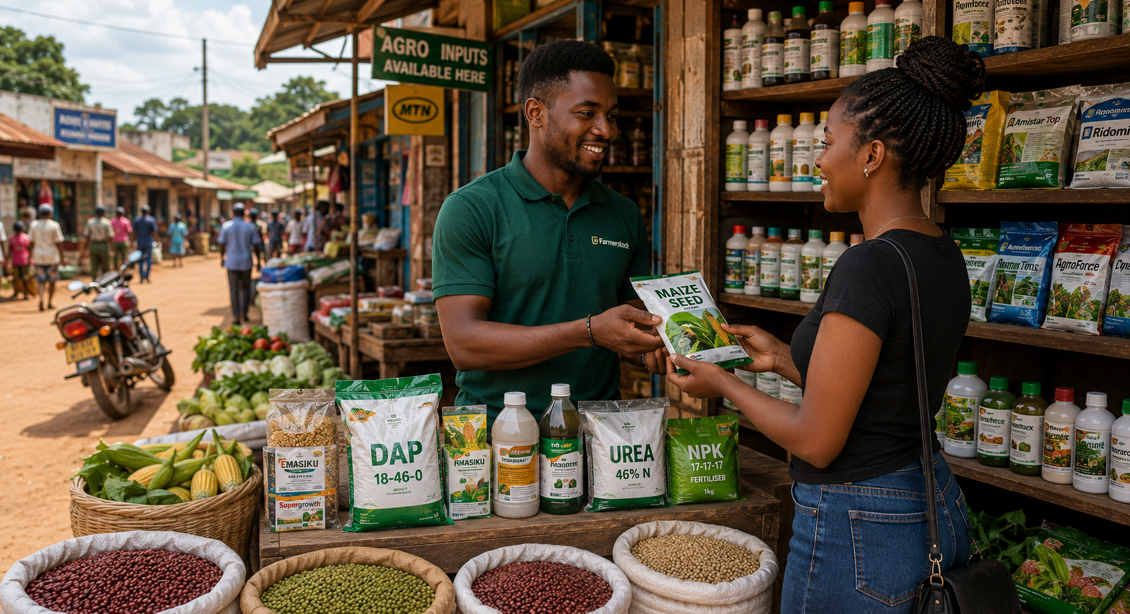
Farmerstack helps these shops expand beyond FMCGs and become reliable agricultural retail points as well.
The vision is simple:
Farm inputs should become as easy to access as soap, sugar, or airtime.
What Happens When Distribution Starts Working
And in communities where distribution improves, change becomes visible quickly.
Dukas, which once stocked only household basics increasingly become dependable agricultural access points as well. Farmers begin purchasing closer to home from shops they already trust. Suppliers gain more efficient access to rural markets that were previously difficult and expensive to serve.
Distribution may appear invisible when it works well.
But its effects are everywhere.
The Bigger Opportunity
The future of rural agriculture will not be built only through better agricultural products.
It will also be built through better distribution systems.
Because agricultural growth depends not only on what is produced, but on whether farmers can reliably access those products when and where they need them most.
Fixing rural agricultural distribution is not simply about selling more inputs.
It is about strengthening the systems that allow rural economies to function more effectively.
The solutions already exist. Village dukas already exist. Farmers already demand agricultural inputs. Suppliers already produce them.
What is needed is a system that reliably connects them all together at scale.
That is why distribution matters.
And that is why stronger rural distribution systems matter even more.
Because when distribution works, agriculture works better.
Farmers produce more. Local businesses grow stronger. Suppliers reach new markets. Rural communities gain greater opportunity and resilience.
Rural communities do not need to be reinvented.
The shops already exist.
The farmers already exist.
The demand already exists.
What has been missing is a reliable system connecting them together.
That is the work Farmerstack is building.
Because when agricultural inputs become as accessible as everyday essentials, rural economies become stronger from the ground up.