 05 July 2022
The Village Duka Was Never Built for Agriculture, But It Might Become the Future of Rural Distribution
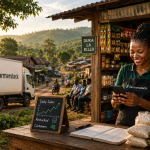
At sunrise in many villages, the duka opens before almost everything else.
Someone buys sugar for tea. Another asks for bread, buns, or doughnuts. A boda rider stops for airtime before leaving for the bigger trading centre. School children arrive with coins for exercise books or biscuits on their way to class. By evening, families return for soap, salt, cooking oil, paraffin, or petroleum jelly.
The village duka moves quietly with the rhythm of rural life.
For decades, these small shops have served as the closest and most consistent retail presence inside rural communities. They are trusted not because they are modern or sophisticated, but because they are nearby, familiar, and woven into everyday life.
And yet, by midday, a farmer from that same village may still travel to town searching for genuine seed, fertiliser, or crop protection products.
The contradiction is striking.
Rural communities already have thousands of retail points within walking distance of farmers.
Yet agricultural access remains one of the biggest challenges in rural farming.
That raises an important question:
What if the future of rural agricultural distribution is already hiding in plain sight?
The Duka Was Built for Survival, Not Agriculture
Long before anyone talked about “last-mile distribution,” rural communities had already built their own form of retail infrastructure.
The village duka.
Small. Informal. Often family-run. Usually positioned along dusty roadside trading centres, near schools, markets, or busy footpaths.
But these shops were never originally designed around agriculture.
They evolved around survival.
Their inventory reflects the realities of rural life:
- small daily purchases
- irregular cash flow
- seasonal income
- immediate household needs
That is why most village dukas became centred around fast-moving consumer goods such as:
- sugar
- soap
- cooking oil
- salt
- bread
- tea leaves
- beverages
- dry foods
- jellies and body lotions
- airtime
- baby diapers.
Products people buy frequently, consistently, and in affordable quantities.
The duka succeeds because it understands rural behaviour remarkably well.
It understands that many customers cannot buy in bulk. It understands trust-based relationships. It understands convenience. It understands that proximity matters.
In many villages, the duka is not only a place of commerce.
It is part of the social and economic rhythm of community life.
Why Agricultural Inputs Rarely Penetrated Deeply Into Villages
Agricultural inputs evolved very differently from FMCGs.
Seed, fertiliser, crop protection products, and livestock inputs are:
- more seasonal
- more expensive
- slower-moving
- more technical
- more sensitive to timing and storage conditions
For many small village shops, stocking these products consistently has historically been difficult and risky.
As a result, rural agricultural retail often concentrated itself elsewhere:
- urban agro-dealers
- larger trading centres
- fragmented supply networks
- seasonal distribution channels
Over time, an invisible separation emerged inside rural economies.
Village dukas became the access point for household consumption.
Agricultural inputs became something farmers travelled elsewhere to find.
This separation became so normal that many people stopped questioning it.
But perhaps the bigger question is why rural retail networks were overlooked in the first place.
Because although dukas evolved informally and independently, they already solved one of the hardest problems in rural commerce:
being physically close to people consistently.
That is not a small achievement.
In fact, it may be one of the most valuable forms of rural infrastructure already in existence.
The Infrastructure Hiding in Plain Sight
Rural infrastructure is often imagined as roads, warehouses, power lines, or storage facilities.
But trusted local retail networks are infrastructure, too.
Village dukas may appear small individually, but collectively they form a deeply distributed access network built over decades through trust, repetition, and proximity.
These shops already understand:
- local demand patterns
- seasonal purchasing behaviour
- community relationships
- affordability realities
- local mobility constraints
They already serve farmers daily through household essentials and FMCGs.
What they often lack is reliable integration into agricultural distribution systems.
And that may be the real opportunity.
Not replacing the village duka.
Strengthening it.
What If the Future Does Not Require Building Entirely New Systems?
Many agricultural and development systems instinctively look toward building new structures:
- new retail outlets
- new supply chains
- new distribution hubs
- new infrastructure networks
But rural communities already possess something powerful:
existing local commerce with embedded trust and daily engagement.
What if the future of agricultural access is not about creating entirely new rural retail systems from scratch?
What if it is about enabling the systems already present inside communities to function more effectively?
That possibility changes the conversation completely.
Because it shifts the focus from:
“How do we build new infrastructure?”
to:
“How do we unlock the infrastructure already there?”
And that may ultimately prove more scalable, more sustainable, and more deeply rooted in rural reality.
From Everyday Retail to Agricultural Access
This is part of the thinking behind Farmerstack.
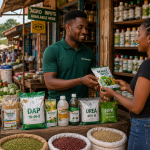
Farmerstack operates as a demand-driven last-mile distribution network connecting suppliers to rural communities through village dukas and cooperatives.
The idea is not to reinvent rural commerce.
It is to strengthen the systems connecting agriculture to the commerce that already exists.
Hidden inside thousands of village dukas is an overlooked possibility:
the foundations of a much larger rural distribution system may already exist.
Village dukas already serve farming communities every single day. Farmers already trust them. Communities already depend on them.
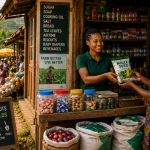
The opportunity is helping these shops evolve into more dependable agricultural access points as well.
That requires:
- stronger supplier coordination
- better inventory movement
- improved demand visibility
- more reliable last-mile distribution
- deeper integration between suppliers and local retail networks
Over time, this changes the role of the duka itself.
Not by replacing its original purpose, but by expanding it.
The village duka remains what it has always been:
a trusted local shop at the centre of community life.
But it can also become something more:
part of the infrastructure connecting rural farmers to the products they need to farm more productively.
A Different Way to Think About Rural Agriculture
For years, agricultural conversations have focused heavily on products:
better seed, better fertiliser, better technology, better financing.
All of these matter.
But products alone do not create access.
Systems do.
And some of the most important systems are often the ones already hiding in plain sight.
The village duka may look ordinary.
But ordinary infrastructure, repeated thousands of times across rural communities, becomes powerful.
Because when trusted local retail networks become stronger, rural economies become more connected, more accessible, and more resilient from the ground up.
The village duka was never originally built for agriculture.
But the future of rural agricultural distribution may not begin with building entirely new systems.
It may begin by recognising the power of the ones already standing quietly at the centre of village life.